D-Wave Showcases Dual-Platform Progress at APS 2026
March 23, 2026 | 5 minute read

Article Highlights

D-Wave highlighted major progress across its dual-platform quantum roadmap at APS 2026, presenting advances in both annealing and gate-model systems. The work demonstrated improved performance, scalability, and new capabilities such as analog-digital simulation, reverse annealing, and error-corrected quantum operations. Together, these results reinforce D-Wave’s focus on delivering practical, real-world quantum computing impact.

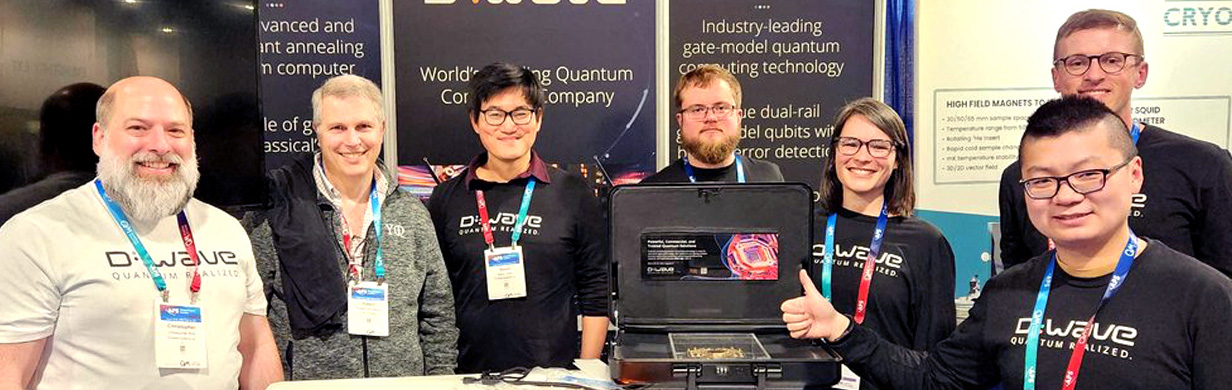
The APS Global Physics Summit is one of the most important gatherings in the physics community—a place where researchers compare notes, challenge assumptions, and share the latest results pushing the field forward. 

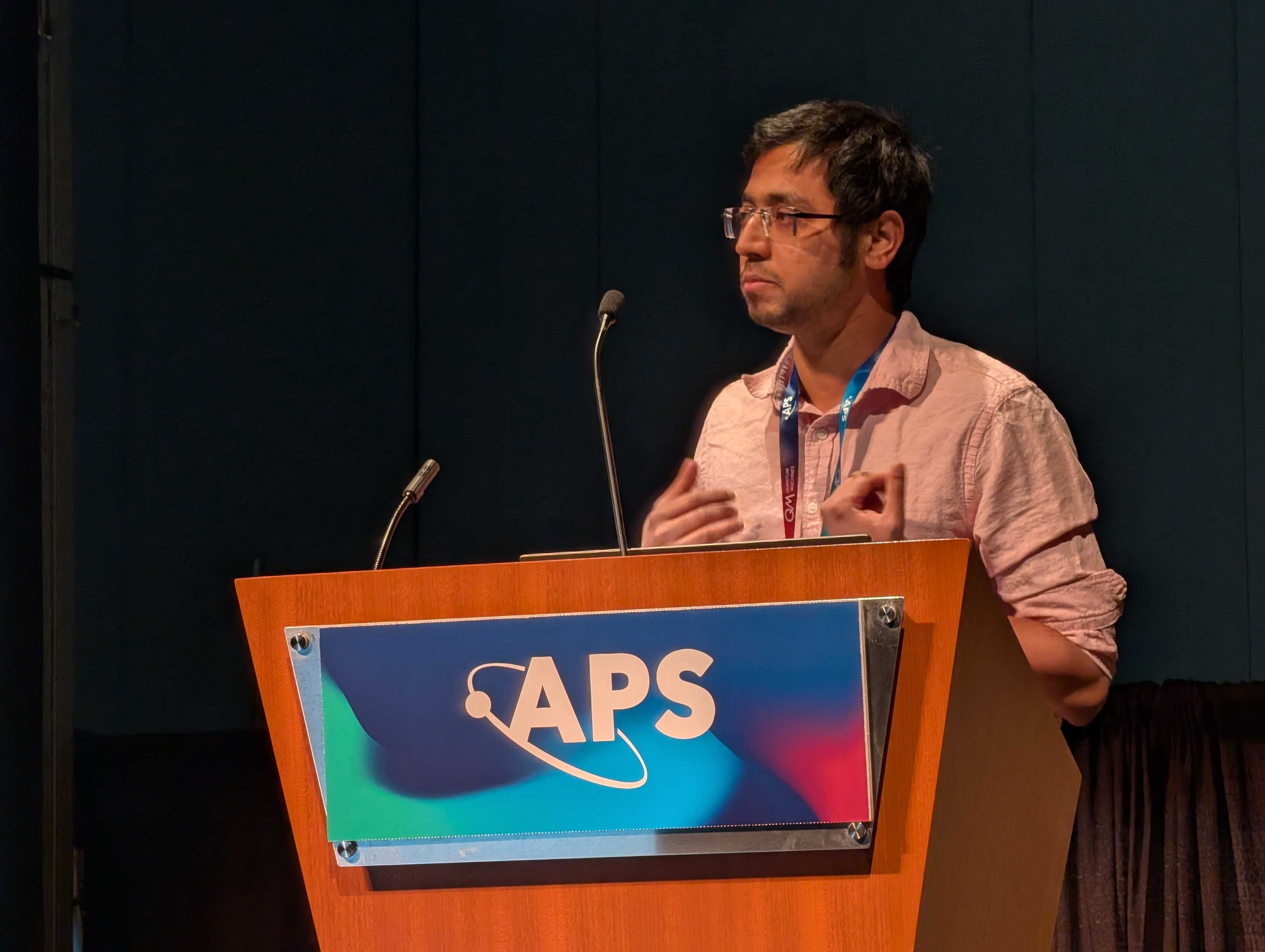
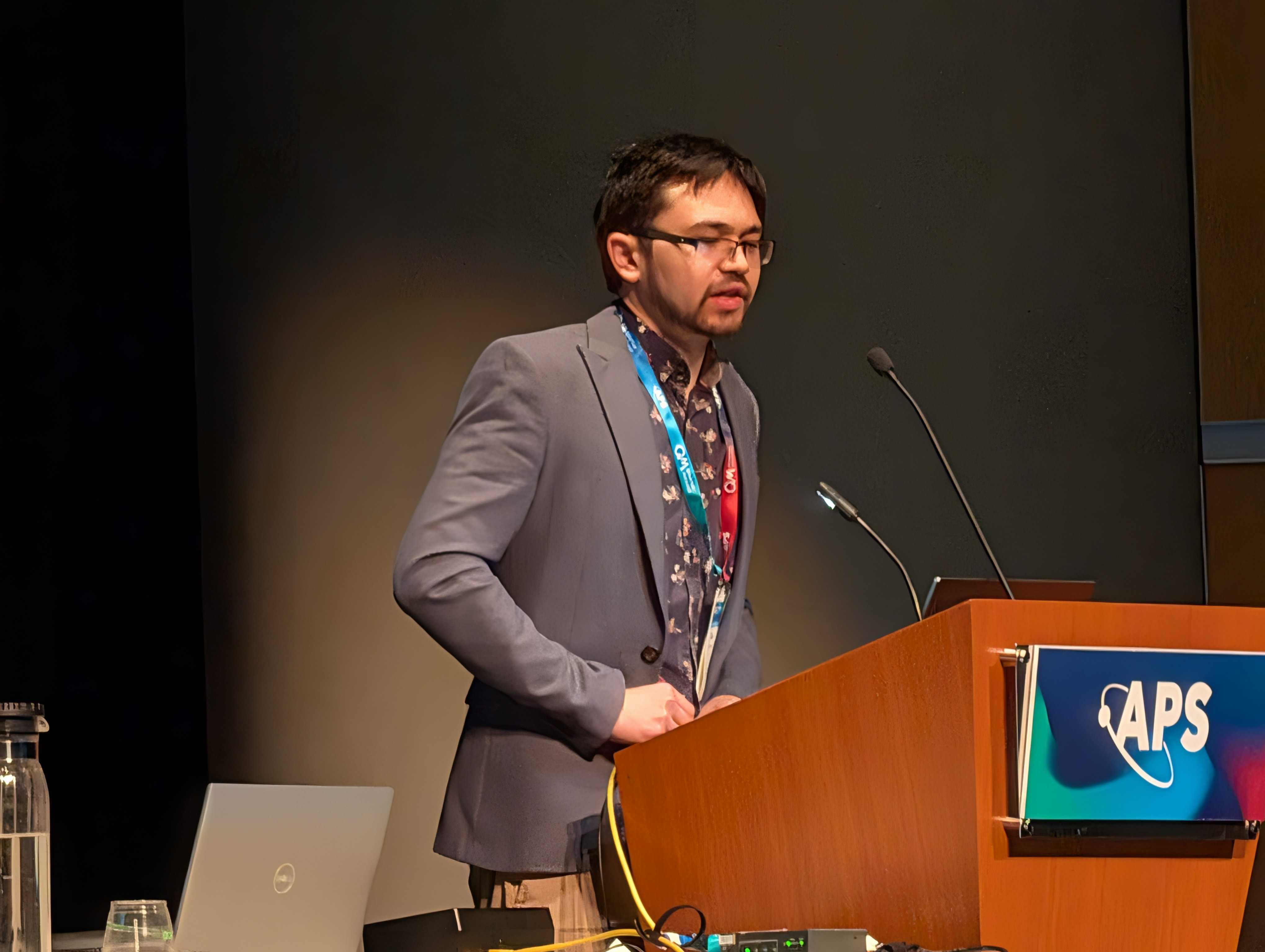
This year, D-Wave™ researchers presented new scientific work that reflects something we care deeply about: building quantum systems that don’t just exist in theory, but deliver measurable, real-world performance. Our team shared research and technical advances spanning annealing and gate-model quantum computing, including work in analog-digital processor control, error detection and correction, programmable quantum dynamics and optimization.  

The research we presented at APS shows how our approach to building quantum computers is taking shape across our dual-platform product development roadmap. On the annealing side, our scientists and engineers continue to improve performance and scale in systems already tackling real-world problems, such as workforce scheduling, network optimization, and resource allocation. In parallel, we’re advancing our dual-rail approach to gate-model quantum computers. The result of this unique approach reflects the speed of superconducting with the fidelity of trapped-ion and neutral atom systems. 

In case you missed it, catch up on all the research presented by D-Wave at the 2026 APS Global Physics Summit:  

Scaling Advantage in Approximate Optimization with Quantum Annealing 

This talk presented evidence of a scaling advantage for annealing quantum computers in approximate optimization on nonplanar 2D spin-glass problems using the D-Wave Advantage™ QPU. Leveraging quantum annealing correction to create over 1,300 error-suppressed logical qubits, the team benchmarked performance against leading classical heuristics and examined scaling behavior on the more recent Advantage2™ system.

Read the full abstract here.

Extracting the Nishimori Line in Random-bond Ising Models with Quantum Annealing 

When annealing very slowly, annealing quantum computers can effectively act as Boltzmann samplers for classical Ising models, making them valuable tools for studying equilibrium statistical mechanics of frustrated and disordered systems. Here, we demonstrated the ability to quantitatively extract the Nishimori line and the multicritical point in both the two and three-dimensional models using D-Wave’s annealing quantum computers.

Read the full abstract here.

Unlocking Coherent Reverse Annealing on a D-Wave Advantage2 Quantum Processor 

Reverse annealing provides important benefits over forward quantum annealing: in the context of quantum optimization, reverse annealing may, under appropriate conditions, allow for finding global minima substantially faster than forward annealing. In the realm of quantum simulation, it allows for studying the Ising dynamics of specified initial states. This presentation described a novel fast reverse annealing protocol that enables coherent reverse annealing on a D-Wave Advantage2 quantum processor. 

Read the full abstract here.

Analog-digital Quantum Simulation of a Disorder-induced Localized Phase on a D-Wave Advantage2 QPU

Analog-digital quantum computing is an exciting emerging computational paradigm that combines aspects of analog Hamiltonian dynamics with digital control. By leveraging these new capabilities, we presented experimental results that affirm the D-Wave Advantage2 QPU as a rich platform for the simulation of dynamical quantum systems. 

Read the full abstract here.

High Fidelity Magic State Preparation in an Error-detecting Surface Code  

The most well-established route to achieving universal fault-tolerant quantum computation requires the preparation of so-called magic states. We propose a new scheme for preparing initial magic states with logical error rates at the 10-4 to 10-5 level, by making use of the highly structured noise of dual-rail cavity qubits in a flagged, error-detected state preparation circuit comprised of just five dual-rail qubits. In this two-part talk, we described the principles and fault-tolerance properties of our scheme, estimated reductions in the footprint of magic state factories, and presented experimental results from one of our dual-rail systems. 

Read the full abstract here.

SONAR: A Quantum Harmonic Balance Technique for Identifying Nonlinear Resonances in Systems of Many Coupled Modes 

Spurious nonlinear processes often limit both the readout and gate operations of superconducting qubits. In this talk, we introduce a simple technique, which we name SONAR, for identifying and tracking nonlinear processes in systems of many coupled modes. We presented numerical results for systems of up to 15 coupled modes obtained on a laptop and demonstrated close agreement between theory and experimental data. 

Read the full abstract here.

A version of this article originally appeared on LinkedIn.

Explore More D-Wave Research
Learn more about the science behind our annealing and gate-model quantum technology.

Share this article

More Articles
Stay up to date with the latest lorem ipsum dolor. Sepian monotus
Email Address
By subscribing you agree to terms in our Privacy Policy
and provide consent to receive updates from our company.