Quantum Computing
To speed computation, quantum computing systems process information using quantum mechanical effects that are fundamentally different from those used in classical computers. Quantum computing has the potential to lead to breakthroughs in science, business, and other domains.
Quantum Computation
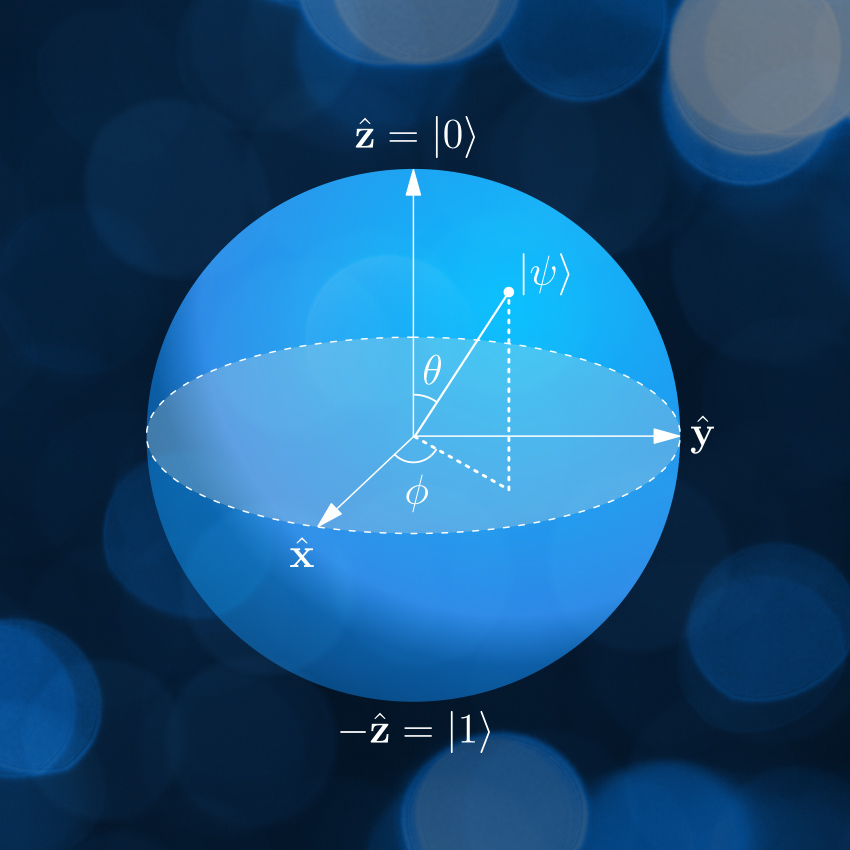
This explains how quantum computing works at a fundamental level. Rather than store information using bits represented by 0s or 1s as conventional digital computers do, quantum computers use quantum bits, or qubits, to encode information as 0s, 1s, or both at the same time. This superposition of states—along with the other quantum mechanical phenomena of entanglement and tunneling—enables quantum computers to manipulate enormous combinations of states at once.

Quantum Annealing
D-Wave systems use a process called quantum annealing to search for solutions to a problem. This is a form of quantum computing designed for optimization.
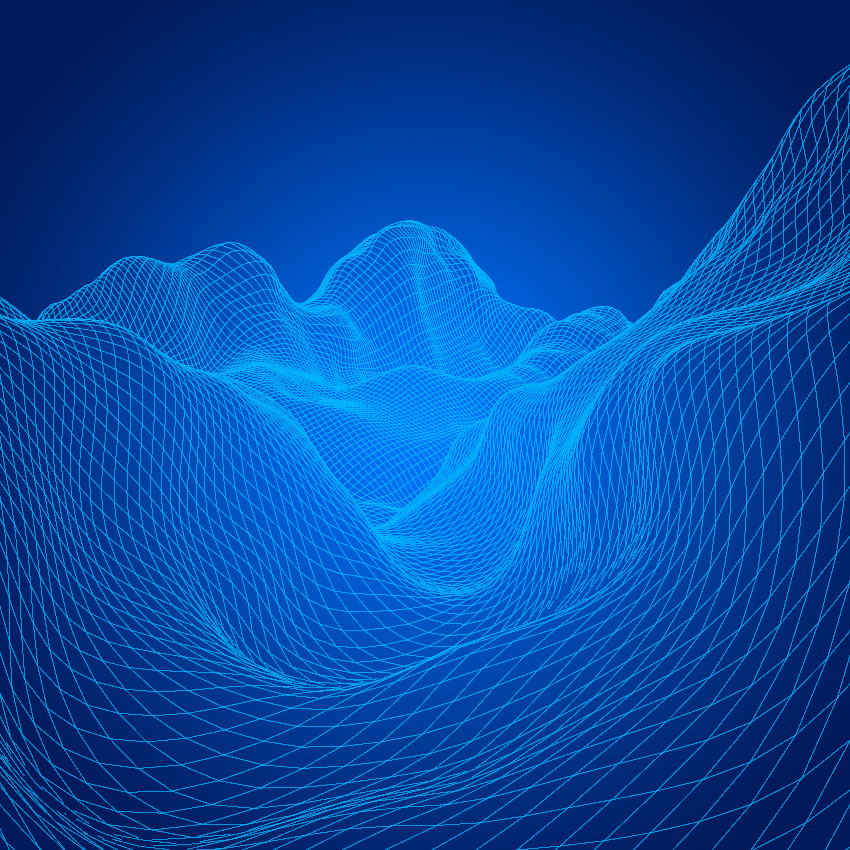
In nature, physical systems tend to evolve toward their lowest energy state: objects slide down hills, hot things cool down, and so on. This behavior also applies to quantum systems. To imagine this, think of a traveler looking for the best solution by finding the lowest valley in the energy landscape that represents the problem.

Gate-Model Quantum Computing
D-Wave is the world’s first and only dual-platform quantum computing company, building annealing and gate-model quantum computing systems to address the full range of customers’ complex computational problems.This will unlock new capabilities in the simulation of quantum systems, with applications in materials science and drug discovery.
D-Wave’s gate-model program focuses on industry-leading dual-rail qubits that greatly simplify and advance error correction, which is key to delivering commercially-viable gate-model quantum computers. D-Wave is building a comprehensive quantum portfolio designed to meet the full range of real-world computational demand.


Classical vs Quantum
Classical algorithms seek the lowest valley by placing the traveler at some point in the landscape and allowing that traveler to move based on local variations. Such classical algorithms are prone to leading the traveler into nearby valleys that may not be the global minimum. Numerous trials are typically required, with travelers beginning their journeys from different points.
In contrast, quantum annealing begins with the traveler simultaneously occupying many coordinates thanks to the quantum phenomenon of superposition. Quantum tunneling allows the traveler to pass through hills—rather than be forced to climb them—reducing the chance of becoming trapped in valleys that are not the global minimum. Quantum entanglement further improves the outcome by allowing the traveler to discover correlations between the coordinates that lead to deep valleys.

Programming an Annealing Quantum Computer
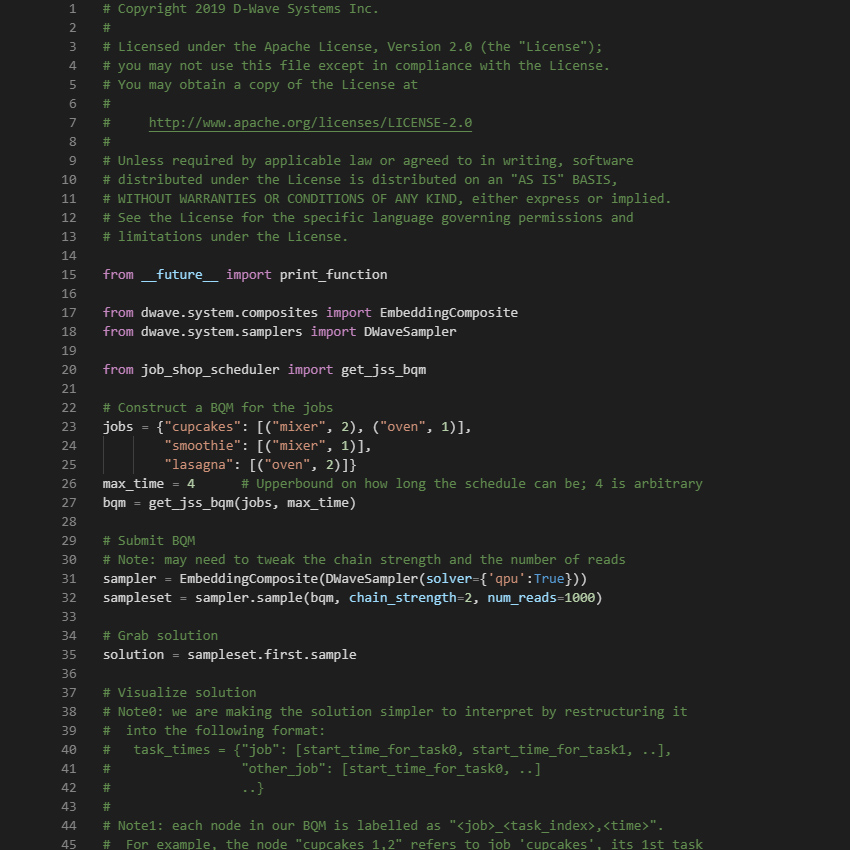
To program an annealing quantum computing system built for solving optimization problems, a user maps a problem into a search for the “lowest point in a vast landscape,” corresponding to a low-energy outcome. The quantum processing unit evolves through quantum states that represent many possible configurations, helping it locate low-energy arrangements. The returned results reflect the low-energy configurations of qubits found during the process, which correspond to the valleys in the energy landscape. These values are delivered back to the user program over the network.
With the Ocean software development tools and hybrid solvers, the complexity of quantum programming is abstracted away so users can focus on the business problem at hand.

Frequently Asked Questions
A quantum computer uses quantum mechanical effects to perform calculations that are often too slow, or too hard, to do with classical computers. Quantum mechanical effects—such as superposition, tunneling, and entanglement—are often only observed at small scales for systems that are confined in a tight space.
The processor of a quantum computer is designed with devices that exhibit these properties, enabling new approaches to computation. Quantum systems can accelerate applications such as optimization (e.g., workforce scheduling and logistics routing), molecular and materials simulation, and certain types of cryptographic and mathematical problems.
Different types of quantum computers harness these effects in different ways. For example, annealing quantum computers use quantum fluctuations and tunneling to find low-energy solutions to optimization problems, while gate-model quantum computers use effects such as entanglement in sequences of quantum gates (operations) acting on qubits to run algorithms.
Quantum computers today are primarily used for complex optimization, simulation and research. They are used to solve sampling problems, simulate physical systems, solve problems in areas such as logistics and manufacturing, and support research in materials science and machine learning.
D-Wave’s annealing quantum computers are among the few delivering real-world commercial value in production environments today, solving large-scale optimization problems.
Looking ahead, gate-model quantum computers are expected to expand the range of applications by enabling new types of quantum algorithms, including those for advanced chemistry simulation, cryptography, and certain mathematical problems.
Quantum computing uses the principles of quantum physics to process information in new ways. Instead of evaluating one option at a time, quantum computers can efficiently explore many possible solutions simultaneously, making them especially useful for solving complex optimization problems and simulating complex physical and chemical systems.
The five often found components of a typical quantum computing system are a quantum processor containing qubits and couplers, control electronics, hardware (often cryogenic) that shields the QPU from external interference, measurement systems and software that enables users to define problems and execute them on the quantum processing unit (QPU).
Annealing quantum computing is a form of quantum computing designed to solve optimization and sampling problems, including applications in materials research. It works by guiding a quantum system toward the lowest-energy configuration, which corresponds to an optimal or near-optimal solution among many possibilities.
Annealing quantum computing and gate-based quantum computing are two complementary approaches within the broader field of quantum computing. Annealing quantum computing is particularly suited to optimization and sampling tasks, including applications in materials research, by guiding a quantum system toward low-energy states that correspond to high-quality solutions. Whereas gate-based quantum computing uses sequences of quantum logic gates to implement algorithms in a programmable, circuit-based model.
A key difference between the two is how interactions occur. Quantum annealing allows many variables to evolve together, while gate-model systems apply sequences of localized operations. Both approaches use quantum effects but are suited to different computational models and use cases.
D-Wave’s annealing quantum computers are commercially available today and are used in production applications, often in combination with quantum-classical hybrid solvers to address large, real-world problems. Meanwhile, D-Wave is advancing a gate-model platform alongside its annealing systems, with plans to bring an initial gate-model system to market in 2026 as part of its dual-platform strategy.
Learn More, Get Started
If you’d like to learn more about the amazing science behind our quantum computers, check out the publications and Advantage2 page. If you’re ready to get started, sign up for the Leap quantum cloud service.